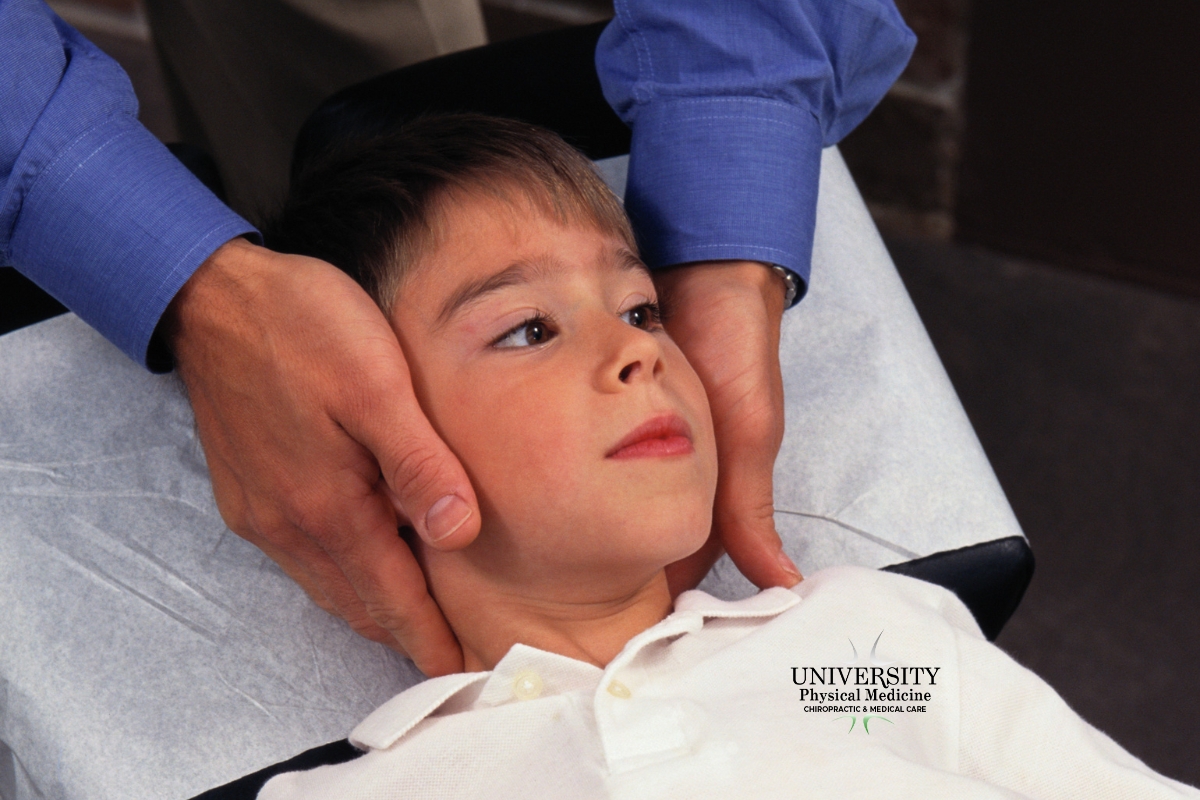
Is Chiropractic Care Safe for Kids? What Tallahassee Parents Should Know
Most Tallahassee parents asking about chiropractic care for their children share one common concern: is it actually safe for a kid who cannot always explain what hurts?
University Physical Medicine has provided chiropractic care to Tallahassee families for years, treating patients as young as two days old. Dr. Nicholas Belletto is an FSU alumnus who chose to raise his own children in Tallahassee, making pediatric health a personal priority, not just a clinical one.
Before booking an appointment, parents deserve clear answers. What follows covers five key areas: what research says about pediatric chiropractic safety, which childhood conditions respond well to care, warning signs to watch for, what a first visit actually looks like, and how to choose a qualified provider right here in Tallahassee.
What Research Says About Safety of Pediatric Chiropractic
Peer-reviewed research consistently supports spinal manipulative therapy for children as safe when a trained and qualified clinician performs it. Fewer than 1% of pediatric patients experience even mild adverse reactions, making it one of the lower-risk conservative care options available to parents.
When side effects do occur, they are mild and short-lived. Temporary muscle soreness or light fatigue after an adjustment typically resolves within 24 hours without any intervention. Most children show no reaction at all beyond visible relaxation during and after care.
Pediatric adjustments use significantly less force than adult treatment. A provider calibrates pressure based on the child's age, size, and specific condition, which means an infant receives a fundamentally different experience than a teenager or an adult. Published literature available through NCBI and PubMed supports this age-specific approach as both appropriate and effective for musculoskeletal concerns in children.
Professional bodies including the American Chiropractic Association recognize pediatric care as a legitimate clinical application when providers follow proper intake and assessment protocols. Safety, in short, is not guaranteed by the treatment alone. Provider qualifications, a thorough health history review, and an individualized care plan all determine whether chiropractic care is appropriate for a specific child.
Parents who understand this distinction make better decisions. Knowing what to look for in a qualified pediatric provider matters as much as understanding what the research says.

Conditions Pediatric Chiropractic Care in Tallahassee Helps
Pediatric chiropractic care goes well beyond pain management. Many families visiting a pediatric chiropractor in Tallahassee come in for concerns they never immediately connected to spinal health, from persistent infant crying to recurring school-age headaches.
Here are the conditions University Physical Medicine commonly addresses in younger patients:
Colic and Digestive Issues: Spinal nerve interference can disrupt gut motility in infants, and gentle adjustments have helped many families find relief from persistent crying and feeding discomfort.
Recurring Ear Infections: Misalignment in the upper cervical spine can affect drainage in the Eustachian tubes, contributing to the cycle of fluid buildup and infection many young children experience repeatedly.
Sleep Disruptions: A spine under tension creates physical discomfort that interrupts sleep patterns, even in children too young to describe what bothers them at night.
Growing Pains: Rapid growth places real mechanical stress on developing joints and muscles, and chiropractic care helps the body adapt before that stress builds into chronic patterns.
Postural Problems from Screen Time and Backpacks: Tallahassee school-age children carry heavy backpacks and spend hours in front of screens, both placing abnormal forward load on a still-developing cervical spine.
Youth Sports Injuries: Student athletes in Tallahassee youth leagues, travel teams, and school sports programs put repetitive strain on joints that early chiropractic care can address before those injuries become chronic.
Early Scoliosis Monitoring: Catching spinal curvature early during routine evaluations allows for earlier intervention and better long-term outcomes before growth plates close permanently.
Behavioral and Attention Concerns: Nervous system interference from spinal misalignment can affect mood regulation and focus, and some families report measurable improvement in behavior following consistent pediatric care.
Birth Trauma Residual Effects: Both vaginal and cesarean deliveries place significant pressure on an infant's cervical spine, and many newborns benefit from an early evaluation at a qualified family chiropractic practice in Tallahassee.
How Chiropractic Adjustments Are Customized for Child Age
Pediatric chiropractic care is not a scaled-down version of adult treatment. Every stage of a child's development calls for a different approach in terms of force, technique, and focus area. A provider who understands this distinction delivers meaningfully better outcomes than one applying a one-size-fits-all method.
Newborns and Infants (Birth to 12 Months)
Infant adjustments use fingertip pressure comparable to what you would use to test the ripeness of a tomato. No more force than that. Primary focus at this stage centers on correcting birth trauma and supporting early nervous system development. Most babies relax visibly during treatment, and many fall asleep before the session ends.
Toddlers (Ages 1 to 4)
Gentle spinal mobilization supports a toddler's body through the physical demands of crawling, pulling up, standing, and learning to walk. Falls at this age happen constantly, and minor traumas accumulate faster than most parents realize. Periodic evaluations help catch developing misalignments before they become patterns.
School-Age Children (Ages 5 to 12)
Care at this stage shifts toward posture correction, backpack load management, and early sports participation strain. Children in this age group respond quickly to treatment. Dr. Belletto has worked with Tallahassee students across this range at University Physical Medicine on Ocala Rd, addressing everything from forward head posture to soccer-related joint strain.
Teenagers (Ages 13 to 18)
Adjustment force increases appropriately as skeletal structure matures toward adulthood. Scoliosis screening becomes especially important during growth spurts when curvature can progress quickly. Chiropractic care for kids in FL at the teenage level also serves student athletes in Tallahassee high schools and club programs who carry significant physical load throughout the school year.
Red Flags and Warning Signs Your Child Needs Chiropractic
Children frequently mask discomfort or simply lack the vocabulary to explain what hurts. What parents read as moodiness, clumsiness, or poor sleep often traces back to spinal nerve interference that a trained provider can identify during a routine evaluation.
Watch for these specific signs in your child:
Uneven Shoulder Height or Head Tilt: A visible lean or shoulder asymmetry at rest often signals spinal imbalance that a pediatric evaluation can identify and address before it worsens.
Frequent Ear Infections: Children who cycle through recurring ear infections despite medical treatment may carry an underlying structural component worth evaluating with a spinal assessment.
Unexplained Fussiness in Infants: Babies who cry inconsolably, arch their backs, or resist feeding may be communicating physical discomfort that a chiropractic evaluation can help identify and relieve.
Persistent Headaches: School-age children who report frequent head pain, especially at the base of the skull or behind the eyes, often benefit from a cervical spine assessment.
Poor Posture That Does Not Improve: A forward head posture or rounded shoulders that persist despite repeated reminders represent a structural issue requiring hands-on correction, not habit coaching alone.
Favoring One Side During Movement: A child who consistently turns their head or steps in only one direction may have developed a spinal asymmetry worth professional evaluation.
Neck Pain After Screen Time: Children spending extended time on tablets or phones in Tallahassee schools and at home are developing cervical strain at younger ages than prior generations.
Unusual Sleep Positions: Children who consistently sleep in rigid or severely twisted positions may be unconsciously accommodating spinal discomfort rather than sleeping comfortably.
When to See a Pediatrician First
Some situations call for a medical evaluation before pursuing chiropractic care. Seek physician clearance first if your child has a fever accompanied by neck stiffness, experienced a recent serious trauma such as a significant fall or car accident, or shows any neurological symptoms including weakness, numbness, or coordination loss. At University Physical Medicine, a medical doctor works alongside the chiropractic team, which means families already have access to both perspectives under one roof on Ocala Rd.
What Happens During a Pediatric Chiropractic Appointment?
Walking into a chiropractic office with a child for the first time can feel uncertain, especially when you are unsure what to expect. At University Physical Medicine in Tallahassee, every step of a pediatric visit is designed to feel calm, transparent, and paced around the child rather than the clock.
Here is exactly what happens from start to finish:
Health History Review: A parent or guardian completes an intake form covering birth history, developmental milestones, current concerns, and any prior injuries or diagnoses that could affect care.
Postural and Physical Assessment: A visual and hands-on evaluation of spinal alignment, range of motion, and muscle tone follows. Every step stays fully non-invasive and moves at the child's comfort level.
Gentle Spinal Evaluation: Specific areas of tension, restriction, or misalignment are identified through careful manual assessment. Children who are too young or too shy to communicate are worked with patiently throughout.
Parent Consultation: Findings are explained in plain, practical language before any adjustment takes place. A personalized care plan is discussed and agreed upon with the parent first.
First Adjustment (If Appropriate): Low-force, age-calibrated spinal correction takes only a few minutes. Most children relax noticeably during treatment, and some fall asleep before it ends.
Home Care Guidance: Parents leave with specific recommendations covering posture habits, activity modifications, and sleep positioning to support progress between visits.
University Physical Medicine's integrated model means a single visit can draw on both chiropractic and medical perspectives when needed, a level of clinical collaboration that families receiving chiropractic care for kids in FL rarely find at a standalone practice.
How to Choose a Qualified Pediatric Chiropractor Near You
Pediatric chiropractic training goes well beyond a standard doctoral degree, and parents are right to ask about qualifications before booking a first appointment. Not every licensed chiropractor carries specific experience working with infants, toddlers, or school-age children, and that difference in background matters when it comes to safe, effective care.
Use these five criteria when evaluating any provider:
Ask About Pediatric-Specific Training: ICPA (International Chiropractic Pediatric Association) certification reflects post-doctoral coursework focused specifically on safe and appropriate techniques for children at every developmental stage.
Confirm Experience With Young Patients: A provider who primarily treats working adults may lack the technique range, patience, and clinical comfort required to work effectively with young or anxious children.
Look for an Integrated or Team-Based Practice: Offices where chiropractors and medical physicians collaborate actively offer a broader clinical perspective and reduce the risk of missing conditions that fall outside chiropractic scope alone.
Evaluate Communication With Children: Pediatric care demands a provider who earns trust with kids of all temperaments, from curious toddlers who touch everything to teenagers who resist being examined.
Verify Openness to Pediatrician Coordination: A qualified provider actively welcomes communication with your child's existing healthcare team rather than operating in isolation from it.
Helping Tallahassee Kids Feel Their Best With Chiropractic
Researching before scheduling is exactly the right instinct, and Tallahassee families who take that step consistently find what they need at University Physical Medicine. Dr. Belletto built this practice as the only integrated chiropractic and medical office in Tallahassee because he believed families deserved both perspectives under one roof, not just one.
His team meets kids at every age and stage with care that adapts to each child individually, from newborns evaluated days after birth to teenagers managing sports demands.
Ready to take the next step? Review what to expect at Chiropractic Care for Kids at University Physical Medicine and contact us to schedule a consultation today.
FAQs
At what age can a child start seeing a chiropractor in Florida?
Chiropractic care can begin at any age, including within days of birth. Many Tallahassee parents bring newborns in for evaluation after both natural deliveries and cesarean births.Are pediatric chiropractic adjustments painful for children?
Pediatric adjustments use gentle, low-force techniques calibrated to the child's age and size. Most children relax during treatment, and many fall asleep by the end of their first session.How many chiropractic visits does my child typically need?
Visit frequency depends on condition, age, and how the body responds. Most families start with three to six sessions and reassess progress from there.Does insurance cover pediatric chiropractic care in Tallahassee FL?
Many insurance plans cover pediatric chiropractic care. University Physical Medicine accepts multiple providers and can verify your child's coverage before the first appointment.How is treating a child different from treating an adult?
Children receive significantly lower adjustment force, and care focuses more on developmental support and nervous system health than on pain resolution, which is the primary adult concern.Should parents inform a pediatrician before starting chiropractic care?
Informing your child's pediatrician before starting chiropractic care is a smart step. Coordinated care between providers produces safer, more complete outcomes for growing children.
