
Why You Don't Have to Be in Pain to See a Chiropractor
A cavity grows quietly for months before a single toothache ever shows up. Spinal stress works the same way. By the time pain arrives, structural damage, nerve interference, and postural strain have already been compounding silently. Most patients walk into a clinic believing pain must come first, when pain is actually the final alarm after a long buildup nobody felt.
That assumption costs people years of avoidable wear. Why you don't have to be in pain to see a chiropractor comes down to one fact: spinal misalignments, joint restrictions, and nerve compression develop long before symptoms surface. At University Physical Medicine, Dr. Nicholas Belletto, D.C. blends chiropractic with medical care under one roof, giving Tallahassee residents a preventive chiropractic care model built to catch issues early.
Why you should see a chiropractor without pain comes down to prevention. Spinal misalignment, nerve interference, and postural strain build silently for months before producing symptoms. Routine chiropractic visits detect and correct these issues early, protecting mobility, sleep, immunity, and overall body function before pain forces a reactive visit.
Why Spinal Pain Is the Last Signal Your Body Sends You
Pain receptors fire only after sustained joint stress crosses a clinical threshold your body can no longer absorb. Before that point, your spine adapts quietly. Vertebrae shift out of position, surrounding muscles tighten to compensate, and nerve pathways carry low-level interference for weeks without producing a single symptom. So if you've ever wondered, do I have to be in pain to see a chiropractor, the honest answer is no. Pain shows up at the end of the process, not the beginning.
What's already happening before you ever feel pain:
Joint Mobility Loss: Spinal joints lose proper alignment over weeks of repetitive motion, sitting habits, and minor strains that never register as injuries.
Soft Tissue Tension Buildup: Muscles surrounding each vertebra tighten silently to brace against subtle instability, locking compensation patterns into your daily movement.
Hardwired Postural Compensation: Your body adopts asymmetrical movement habits that feel normal but quietly accelerate wear on disks, joints, and connective tissue.
Low-Grade Nerve Interference: Compressed pathways begin disrupting communication between your spine and surrounding muscle groups before any tingling or soreness appears.
In Dr. Belletto's clinical experience, most patients walking in with pain already show structural changes that began months earlier. Catching spinal misalignment during that silent window through a wellness care plan almost always means fewer visits, faster recovery, and lower long-term cost than waiting for pain to force a reactive appointment. That's why to see a chiropractor before symptoms surface matters so much.
How Your Spine Quietly Controls 90% of Body Function Daily
Most people picture the spine as a stack of bones holding the body upright. Functionally, it operates as a high traffic communication highway carrying signals between your brain and every organ, gland, and muscle group. A small portion of that traffic produces sensations you actually notice. Far more of it runs silently, regulating systems you never think about until something stops working right. Understanding that split changes how you think about preventive chiropractic care entirely.
How the Familiar 10% Handles Pain and Movement
Roughly 10% of your nervous system manages what you consciously feel. Pain signals, muscle control, and voluntary movement all run through that fraction. Tightening a fist, walking across a room, or pulling away from a hot stove all happen because that portion of your nerves does its job. Most people assume spinal nerves exist mostly for those tasks, which leaves the other 90% completely overlooked.
What the Hidden 90% Quietly Regulates
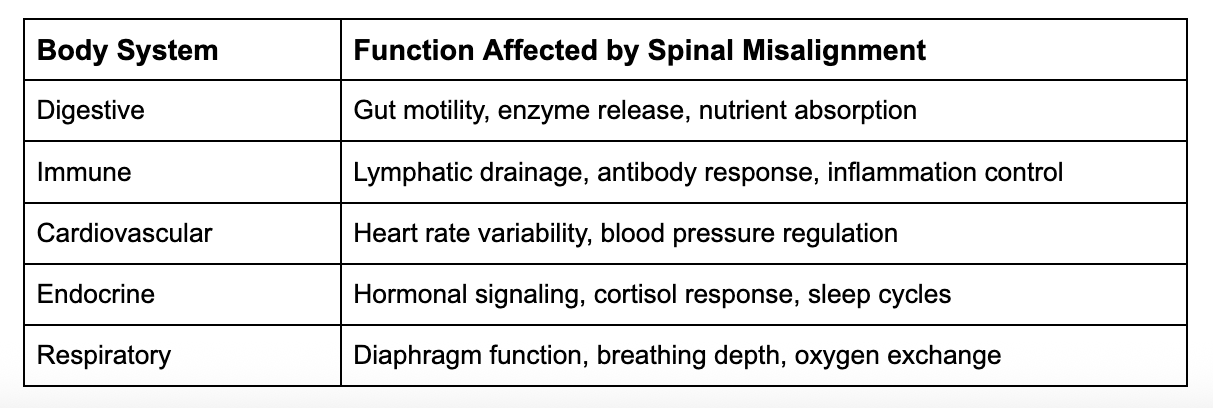
Your autonomic nervous system handles the silent operations keeping you alive. Heart rhythm, digestion, immune signaling, hormonal release, and lung capacity all depend on uninterrupted nerve flow through your spinal column. When a subluxation compresses those pathways, organ systems lose signal clarity long before symptoms ever appear.
Why a Compressed Spine Weakens Your Immune Response
Compressed nerves disrupt the immune signaling your body counts on to fight infection and recover from illness. Patients with chronic subluxations often catch more colds, heal slower, and feel run down through allergy seasons. Tallahassee residents face heavy oak pollen waves every spring, year round humidity driving mold exposure, and FSU and FAMU campus illness cycles each fall.
An autonomic nervous system already operating below capacity struggles under that load. Choosing chiro for nervous system support gives your immune defenses the clear signaling needed to keep up, which is why to go to chiropractor matters even when you feel completely fine.
Five Silent Conditions Building Long Before You Feel Pain
Pain marks the final stage of a problem your body has been managing for months. Long before symptoms surface, specific conditions build quietly inside the spine, joints, and surrounding nerves. Catching them during that silent window explains why you should see a chiropractor as part of routine care, not crisis response.
Forward Head Posture From Desk and Screen Time: Daily phone and laptop use causes gradual cervical curve loss that produces silent structural damage long before any neck pain develops or stiffness appears.
Pelvic and Hip Imbalance from Prolonged Sitting: Uneven hip positioning during desk work distorts spinal loading patterns that compound into disk stress and lower back strain over months of accumulation.
Early Stage Nerve Impingement: Compressed nerve pathways affect organ communication and immune response well before patients ever notice numbness, tingling, or referred pain in arms or legs.
Scoliosis Progression in Adults and Children: Lateral spinal curves caught early respond far better to corrective adjustment than curves discovered only after pain forces a reactive clinical visit.
Postural Degeneration from Chronic Ergonomics: Years of poor sitting habits at desks and in cars compound into structural wear and postural strain that a chiropractor can detect and correct early.
Silent Subluxation Buildup: Repeated stress from minor falls, lifting strains, and daily movement habits creates spinal subluxation patterns that accumulate quietly before producing measurable discomfort or restriction.
How Chiropractic Boosts Wellness You Already Feel Good About
People often ask, can you go to a chiropractor just to get your back cracked, assuming adjustments only matter when something hurts. Routine care delivers far more than an audible release. Patients who feel healthy already see measurable gains in sleep, focus, and physical output, which is another reason why to see a chiropractor before symptoms ever surface.
Sleep Quality Improvement: Spinal adjustments reduce nerve tension that disrupts rest cycles, with research showing roughly one in three patients reports measurable improvement in sleep depth and continuity.
Mental Focus and Cognitive Sharpness: Optimized nerve communication between brain and body supports concentration during long study sessions, high demand work weeks, and tasks requiring sustained attention.
Athletic Performance and Reaction Time: Proper spinal alignment improves balance, coordination, and recovery speed, reducing injury risk for runners, gym goers, weekend cyclists, and recreational athletes.
Stress and Cortisol Regulation: Physical adjustment of the spine releases stored muscular tension and lowers the physiological stress load your body carries through demanding work weeks.
Sustained Energy Levels: When your nervous system runs without interference, your body wastes less energy compensating for structural imbalance, leaving more capacity for daily mental and physical demands.
How Often Should You Visit a Chiropractor Without Any Pain
Visit frequency depends on three factors: your baseline spinal alignment, your physical demands, and your overall health goals. Healthy adults need a different cadence than pregnant patients or competitive athletes. Setting the right rhythm protects your spine without overcommitting your schedule or budget.
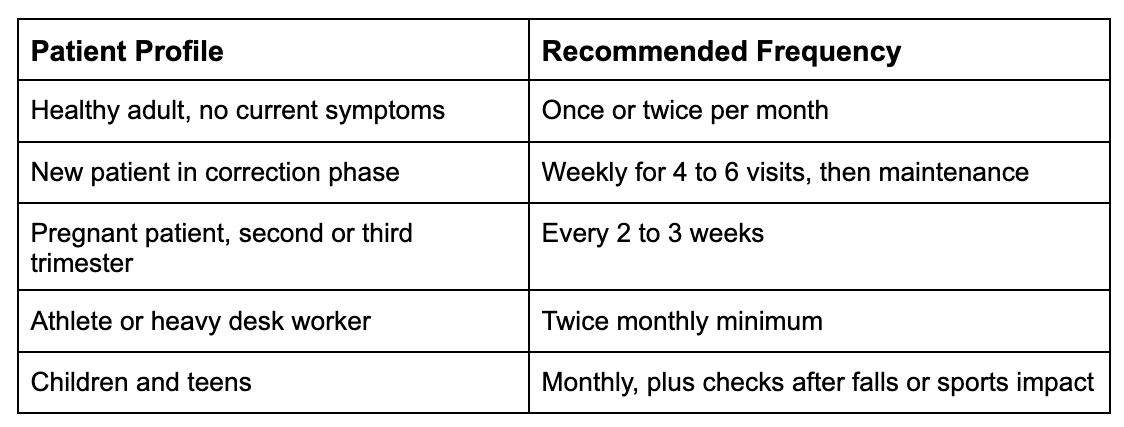
A preventive chiropractic visit at University Physical Medicine takes around 20 to 30 minutes. Dr. Belletto runs a posture check, screens for subluxations, and adjusts only what your spine actually needs that day. Think of maintenance care the way you think of routine dental cleanings: cheaper, faster, and far less painful than waiting for a problem to demand emergency attention.
Searching for a chiropractor near me makes the most sense before symptoms force the decision, and our new patient special offer gives you an easy starting point.
Stay Ahead of Pain With Preventive Chiropractic Care
Pain free never means problem free. Silent spinal stress builds quietly for months before producing a single symptom you can feel, and waiting until something hurts almost always costs more in time, money, and recovery effort. A baseline assessment now protects mobility you have not yet lost.
University Physical Medicine combines chiropractic and medical care under one roof, giving Tallahassee the only integrated model of its kind. Searching for a Tallahassee chiropractor or chiropractor near me? Schedule a baseline assessment with Dr. Belletto and ask about our New Patient Special Offer. Located at 1224 Ocala Rd, Tallahassee FL 32304, just one mile from FSU and TCC. Call (850) 576-2129 to book today.
FAQs
Can a chiropractor help if your back feels completely fine right now?
Spinal misalignments affect nerve function, posture, and organ communication long before producing pain a patient would notice or report during normal daily activity.How do you know if you have a subluxation when nothing hurts?
Only a clinical chiropractic exam confirms a subluxation. Many patients find alignment issues during routine preventive visits long before any noticeable pain develops.Is chiropractic care safe for someone with no pain or injury?
Adjustments rank among the safest forms of preventive healthcare and remain appropriate for most adults, children, athletes, and pregnant patients without symptoms present.What is the difference between maintenance care and treatment chiropractic care?
Treatment care addresses an active injury or pain condition. Maintenance care supports optimal spinal function for patients already feeling well who want to stay that way.Can you go to a chiropractor just to get your back cracked?
Adjustments deliver real clinical value beyond the audible release. Each session restores joint mobility, supports nerve function, and prevents long term postural compensation patterns.
