Insights
Why Winter Triggers More Migraines in Tallahassee and How to Get Relief

If it feels like your migraines spike every winter, you're not imagining it, and you're not alone. For many Tallahassee residents, the cooler months bring a predictable increase in migraine frequency and intensity. But why? And more importantly, why do migraines keep coming back even after an attack finally subsides?
The answer lies at the intersection of seasonal physiology and an often-overlooked structure: the upper cervical spine. Understanding what winter does to your nervous system, and how University Physical Medicine's Migraine Relief Center addresses it without relying solely on medication, can change how you manage these attacks long-term.
Why Winter Makes Migraines Worse in Tallahassee
Even in North Florida, where winters are mild by national standards, the season delivers enough environmental shift to activate multiple migraine triggers simultaneously.
Barometric Pressure Changes
The biggest culprit is barometric pressure. Cold fronts moving through Tallahassee cause rapid pressure drops, and the trigeminal nerve, the primary pain pathway in migraine, responds by increasing its firing rate. Research has documented a clear correlation between falling barometric pressure and migraine onset, with effects typically felt 6 to 24 hours after the front passes. This explains why migraines that seem to appear from nowhere often trace back to the previous day's weather.
Cold-Induced Vascular and Muscular Changes
Cold air triggers vasoconstriction, blood vessels narrow to conserve heat. When you move back indoors or the cold snap breaks, that vasoconstriction reverses. This expand-contract cycle in cerebral vasculature is a well-established migraine driver. Simultaneously, muscles in the neck and shoulders contract involuntarily in cold, increasing tension along the suboccipital chain, the small muscles at the base of your skull. That cervical tension is the structural bridge between winter weather and recurring headache.
Disrupted Light and Sleep Cycles
Shorter days reduce light exposure, disrupting serotonin and melatonin production. Both are tied directly to migraine threshold, lower serotonin means higher headache sensitivity. Add holiday stress, irregular sleep schedules, and seasonal increases in alcohol consumption, and winter in Tallahassee becomes a stacked migraine deck before the first cold front even arrives.
Why Do Migraines Keep Coming Back?
The question most patients ask isn't 'why did I get this migraine?', it's 'why do they keep happening?' For a significant subset of sufferers, the answer points to the cervicogenic mechanism: recurring dysfunction in the upper cervical spine.
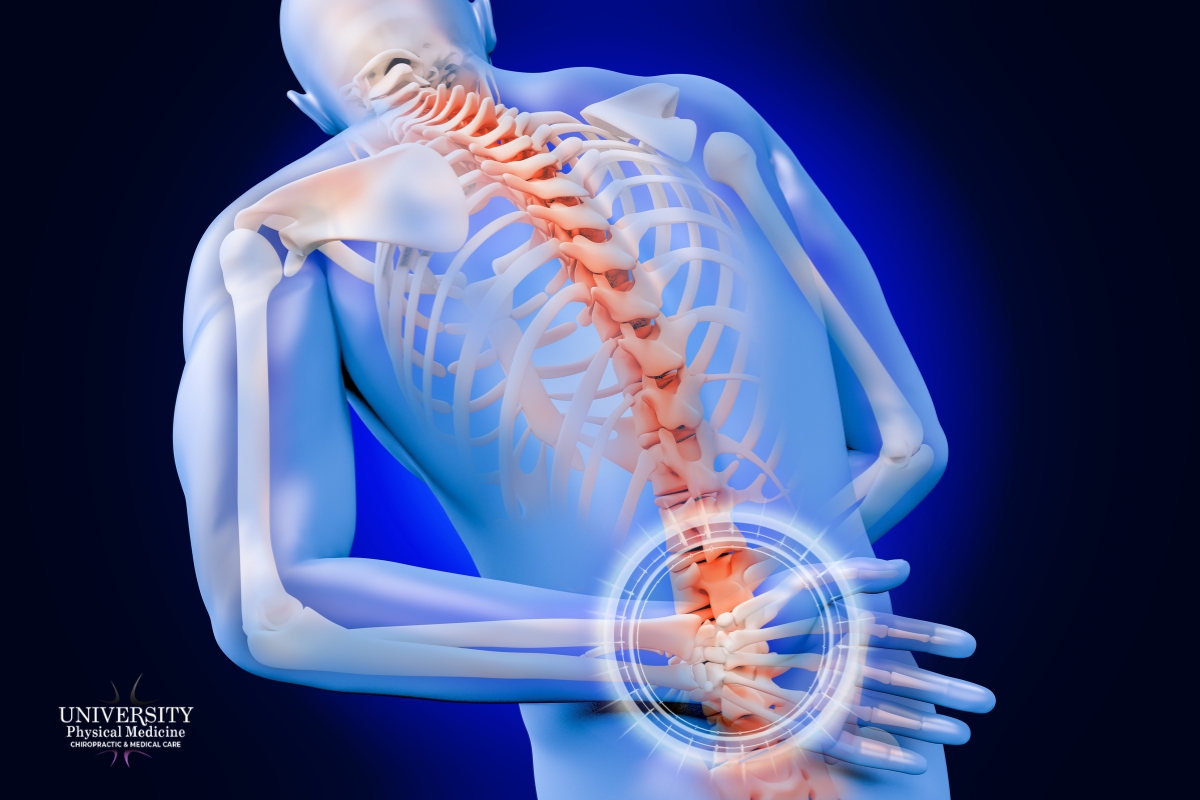
Migraine is rarely a brain-only event. For many patients, recurrent episodes are driven or perpetuated by restriction and mechanical stress at C1, C2, and C3, the top three vertebrae of the spine.
The Trigeminocervical Nucleus Connection
The trigeminal nerve, which carries pain signals from your head and face, converges with cervical nerve roots (C1-C3) in a region of the brainstem called the trigeminocervical nucleus. When joints in the upper cervical spine become restricted, they generate continuous input into this nucleus, priming the migraine pathway to fire with progressively less provocation. This is central sensitization: repeated stimulation lowers the threshold, so triggers that would not have caused a migraine a year ago now reliably do.
Why Winter Amplifies This Mechanism
Cold-induced muscle guarding in the neck increases mechanical stress on C1-C3. If those joints are already restricted, which many patients don't discover until a chiropractor evaluates them, winter turns up the volume on an already sensitized system. This is why migraines that are manageable in summer can become genuinely disabling by January. Addressing this spinal component alongside other headache triggers is central to how UPM approaches both neck pain and migraine management, which is why patients often find the two conditions improve together.
Chiropractic Care for Migraines in Tallahassee
A growing body of clinical research supports cervical manipulation and manual therapy as effective tools for reducing migraine frequency, not just treating individual attacks. A systematic review in The Journal of Headache and Pain found that spinal manipulation was associated with significant reduction in migraine days per month for patients with cervicogenic headache overlap.
Upper Cervical Mobilization
Targeted adjustments to C1 and C2 reduce joint restriction, decrease afferent input to the trigeminocervical nucleus, and relieve the mechanical sensitization that keeps migraines recurring. Unlike medication, which manages symptoms after they start, cervical mobilization targets the upstream driver.
Suboccipital and Soft-Tissue Release
Manual release of the suboccipital muscles reduces referred pain into the head and decreases tension through the dural system, the connective tissue sheath surrounding the spinal cord and brain. Patients with significant tension at the base of the skull often notice relief within the first few visits.
Thoracic Mobilization
Stiffness in the upper thoracic spine contributes to compensatory cervical tension. Including thoracic assessment in a full spinal evaluation is part of why UPM's migraine outcomes tend to be more durable than isolated neck treatment alone.
Migraine Relief Without Medication in Tallahassee
For patients concerned about medication overuse headache, a well-documented cycle where frequent use of triptans or OTC analgesics paradoxically increases headache frequency, non-pharmacological care is often the more sustainable path.
UPM's non-medication approach to migraine management includes:
- Cervical chiropractic care targeting C1-C3 restriction and suboccipital tension
- Magnesium supplementation guidance (low magnesium is found in up to 50% of migraine sufferers during attacks, discuss with your provider before starting)
- Sleep consistency coaching, maintaining the same wake time daily is one of the most protective factors against migraine
- Posture and ergonomic correction for screen-related headache overlap, particularly relevant for students and remote workers in Tallahassee
- Trigger journaling to map individual patterns across barometric, dietary, hormonal, and postural variables
When appropriate, UPM's integrated medical team coordinates with neurologists for patients who also need pharmacological management, offering a both/and approach rather than forcing a choice between disciplines.
When Your Winter Headache Is Actually an Emergency
Not every severe headache is a migraine. Seek emergency care immediately if your headache:
- Reaches maximum intensity within 60 seconds ("thunderclap headache")
- Is accompanied by fever and stiff neck, especially in someone without a migraine history
- Follows a head injury or fall, even one that seemed minor
- Is accompanied by vision changes, facial drooping, or one-sided weakness
- Is described as "the worst headache of my life"
Call 911 or go to the nearest emergency room. These symptoms may indicate a neurological emergency requiring immediate evaluation.
What to Expect at UPM's Migraine Relief Center
University Physical Medicine's Migraine Relief Center provides a comprehensive intake for headache patients: cervical spine evaluation, postural assessment, neurological screening, and integrated coordination between chiropractic and medical providers. Most patients with cervicogenic migraine contribution begin noticing reduced attack frequency within 4 to 6 visits. The goal is not just to manage the current episode, it's to lengthen the interval between attacks and progressively reduce their severity.
If winter migraines are disrupting your work, sleep, or daily life in Tallahassee, a cervical evaluation is the right starting point. Many patients who have managed migraines with medication for years find that the structural driver was never addressed, and addressing it changes the trajectory.
Frequently Asked Questions
Why do my migraines get worse specifically in winter?
Winter stacks multiple triggers simultaneously: rapid barometric pressure drops, cold-induced cervical muscle tension, disrupted sleep from shorter days, reduced hydration due to lower thirst drive in cool weather, and dietary triggers from holiday foods like aged cheese and red wine. In Tallahassee, even mild cold fronts can shift atmospheric pressure quickly enough to trigger the trigeminal cascade, often 6 to 24 hours after the front passes.
Can chiropractic care actually prevent migraines from coming back?
For patients with a cervicogenic contribution, where upper cervical spine dysfunction is amplifying the migraine pathway, chiropractic care can meaningfully reduce both frequency and intensity over time. It addresses the upstream mechanical driver rather than managing downstream symptoms. Results vary by individual, and chiropractic works best as part of a comprehensive plan that may also include lifestyle changes and, when appropriate, medical co-management.
How many chiropractic visits will I need for migraines?
Most patients with cervicogenic migraine overlap begin to notice improvement in frequency within 4 to 6 visits, with more substantial results over 8 to 12. Visit frequency tapers as the cervical spine stabilizes. UPM reassesses at each visit and adjusts the plan accordingly, the goal is measurable improvement, not indefinite treatment.
What can I do at home to reduce winter migraine risk?
Keep sleep and wake times consistent, even on weekends, circadian consistency is one of the most protective factors against migraine. Stay hydrated despite lower cold-weather thirst. Discuss magnesium glycinate supplementation with your provider. Wear a scarf or high collar outdoors to shield your neck from cold air. Limit alcohol and aged cheese during holiday gatherings. Check weather forecasts and plan lower-demand days around incoming cold fronts.
When should I see a neurologist instead of a chiropractor?
Neurologist referral is appropriate when migraines occur more than 15 days per month, when neurological symptoms are present such as vision changes, weakness, or speech difficulty, when medications are failing, or when imaging is needed to rule out secondary causes. UPM's integrated team can facilitate this referral and continue co-managing the cervical component alongside neurological care.
Medical Disclaimer: This blog is for educational purposes only and does not constitute medical advice. Always consult a licensed healthcare provider before beginning any new treatment. If you experience a sudden severe headache, headache with fever and neck stiffness, or headache following head injury, seek emergency care immediately.
Ready to break the winter migraine cycle?
UPM's Migraine Relief Center in Tallahassee is accepting new patients. Our integrated team evaluates the full picture, cervical spine, lifestyle, and medical history, to build a care plan focused on long-term reduction, not just acute relief.
Call (850) 576-2129 | universityphysicalmedicine.com/contact-us