Insights
Student Athletes in Tallahassee: How Chiropractic Care Prevents Sports Injuries
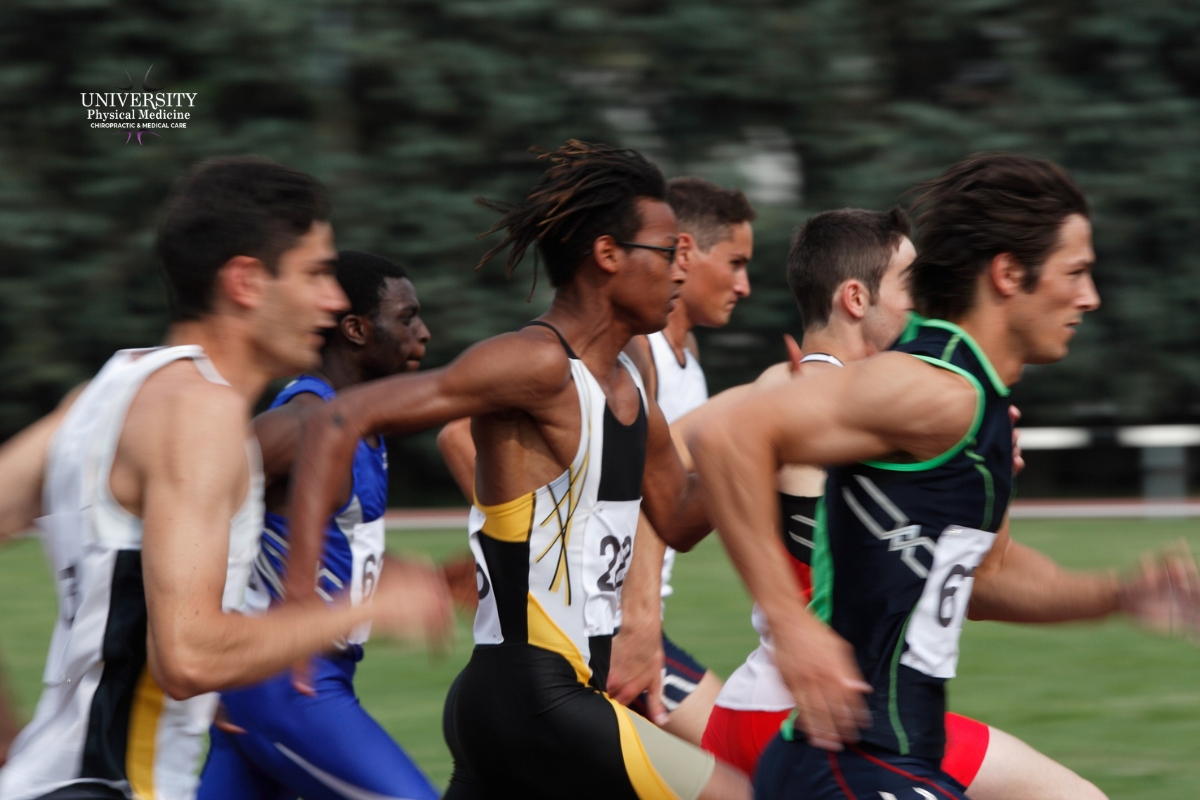
The athlete who gets injured mid-season does not simply miss games. They miss practice, fall behind in conditioning, watch teammates develop without them, and spend weeks or months in a recovery timeline that disrupts every dimension of their athletic life. For student athletes at FSU, TCC, and Tallahassee's high schools, a significant injury can mean the difference between a scholarship and a lost opportunity.
Most athletic injuries do not happen randomly. They follow a pattern: a structural asymmetry develops, movement mechanics compensate, tissue loads increase at specific vulnerable sites, and eventually the load exceeds the tissue's capacity. The injury is the endpoint of a process, not the beginning.
Chiropractic care for student athletes focuses on identifying and correcting that process before it reaches the endpoint. At University Physical Medicine, sports injury prevention in Tallahassee means evaluating how each athlete's spine and musculoskeletal system moves under their sport's specific demands, and addressing the deviations that predict injury before an athlete ever feels pain.
Why Student Athletes Face Unique Injury Risk
Adult athletes carry structural patterns that have largely stabilized. Student athletes do not. The adolescent and young adult musculoskeletal system is simultaneously growing, adapting to increasingly sophisticated training loads, and being asked to perform at competitive levels that would challenge adult athletes. That combination creates injury risk profiles that general sports medicine discussions often understate.
Training Load Outpacing Structural Development
High school and college athletes now train year-round with intensity levels that were uncommon two decades ago. Year-round sport specialization means the same movement patterns load the same joints, tendons, and spinal segments repeatedly without the variety that cross-training provides. Lumbar stress fractures in throwing athletes, sacroiliac dysfunction in distance runners, and cervical compression syndromes in linemen all follow this pattern: repetitive load at the same structural address, without adequate recovery or mechanical variety.
Multi-Sport and Multi-Practice Demands
Many Tallahassee student athletes play overlapping sport seasons, participate in club programs outside their school schedule, or train simultaneously for strength, speed, and sport-specific skill. The cumulative training volume exceeds what any one coaching staff sees. An athlete practicing twice daily during two-a-days while also attending weekend club training applies spinal and soft-tissue loads that compound without adequate assessment of the structural impact. Chiropractic evaluation looks at the whole athlete, not just one practice or one team's schedule.
Growth Plate Vulnerability
The apophyses, growth plate attachment points where tendons meet developing bone, are the structural weak links in adolescent athletes. The traction forces that strong muscles and tendons generate during athletic movement can exceed the apophysis's tensile capacity during active growth phases. Sever's disease at the heel, Osgood-Schlatter at the knee, and iliac crest apophysitis in throwers and kickers all result from this mismatch. Clinical evaluation identifies the loading patterns that target these structures before apophyseal damage creates a significant injury that requires rest.
The Spinal Foundation of Athletic Performance
Every athletic movement originates from or transfers through the spine. A pitcher's velocity comes from a kinetic chain that begins at the feet, transfers through the pelvis and lumbar spine, and arrives at the shoulder and wrist. A sprinter's stride efficiency depends on pelvic symmetry and lumbar mobility. A swimmer's stroke power requires full thoracic rotation. When any segment of the spine moves poorly, whether from restriction, asymmetry, or instability, the entire kinetic chain compensates.
Those compensations are where sports injuries originate. A pitcher with restricted thoracic rotation overloads the shoulder to generate the same velocity. A runner with sacroiliac asymmetry overloads one hip and knee to maintain stride length. A lineman with reduced cervical mobility is at greater risk of injury on contact because the cervical spine cannot distribute the force as effectively through its normal range.
Research published in peer-reviewed sports medicine and chiropractic literature documents that spinal manipulation improves athletic performance metrics, range of motion, muscle activation, and force production, in addition to reducing pain. The American Chiropractic Association has documented chiropractic care's role in the performance and injury prevention protocols of professional sports teams across the NFL, NBA, MLB, and US Olympic programs. The same principles apply to the student athlete competing for a starting position at Godby, Lincoln, or FSU.
What Chiropractic Injury Prevention Looks Like for Student Athletes
A sports-focused chiropractic evaluation at University Physical Medicine goes beyond treating the complaint a student athlete walks in with. It assesses the underlying structural picture that precedes injury in that athlete's specific sport.
Biomechanical Movement Screening
Dr. Belletto performs a movement screen that evaluates single-leg squat mechanics, hip hinge pattern, overhead reach, and rotation symmetry. These patterns reveal the compensations that direct load to vulnerable structures. An athlete who cannot maintain pelvic level during a single-leg squat will transfer that asymmetry into every stride, jump, and direction change of their sport. Correcting the movement pattern through spinal manipulation and hip mobility work reduces the load at the site the compensation was targeting.
Cervical and Thoracic Mobility Assessment
Cervical and thoracic restriction is among the most under-evaluated contributors to both upper and lower extremity sports injuries. A thrower who cannot fully rotate the thoracic spine will compensate through the shoulder, elbow, and wrist, the very structures most at risk of overuse injury in throwing sports. A wrestler or football player with reduced cervical mobility faces increased injury risk on contact because the cervical spine contributes to force dissipation. Restoring full thoracic rotation and cervical mobility through targeted manipulation is not simply a comfort measure, it is a structural safety measure for contact and overhead athletes.
Sacroiliac and Pelvic Alignment
Pelvic asymmetry is one of the most common and most consequential findings in student athletes. When the sacroiliac joints are restricted or the pelvis sits in a rotated position, the lumbar spine, hips, and lower extremities all compensate. The athlete does not feel this as pain, they feel it as tightness, fatigue in one leg, or a sense that their mechanics are slightly off. Left unaddressed, the compensation pattern produces cumulative loading at predictable sites: the lumbar disc, the piriformis, the IT band, and the medial knee. Sacroiliac manipulation and pelvic correction are core components of the UPM student athlete evaluation.
Soft-Tissue and Myofascial Assessment
Trigger points and myofascial restrictions in the paraspinal muscles, hip flexors, glutes, and thoracic musculature alter the way athletes generate and absorb force. A tight psoas alters lumbar curvature and hip extension in every stride. A restricted piriformis changes the femoral head's tracking in the acetabulum and contributes to sacroiliac and knee symptoms. Systematic assessment and treatment of these soft-tissue patterns, through manual therapy and, for persistent cases, shockwave therapy, restores the tissue quality that sport demands.
Sport-Specific Injury Patterns and Chiropractic Focus
SportCommon Injury PatternChiropractic FocusFootball / RugbyCervical compression, lumbar facet loading, AC joint strainCervical and lumbar manipulation; facet mobility; concussion-adjacent cervical evaluationSoccer / TrackSacroiliac joint dysfunction, hip flexor restriction, lumbar disc loadingPelvic alignment; hip and lumbar mobility; gait and stride mechanicsBaseball / SoftballThoracic rotation restriction, shoulder impingement, lumbar sidebend strainThoracic extension; rotator cuff stability; thoracolumbar fascia releaseSwimmingShoulder impingement, thoracic kyphosis from training posture, cervical strainThoracic mobility; scapular stabilization; cervical manipulationBasketball / VolleyballLumbar strain, ankle stability deficits, sacroiliac stressLumbar segmental work; hip and ankle mobility; pelvic balanceCross Country / Distance RunningIliotibial band syndrome, sacroiliac dysfunction, stress reaction patternsPelvic alignment; hip rotation range; lower extremity biomechanics
The sport-specific column reflects the direction of the biomechanical focus, not an exhaustive treatment protocol. Every athlete presents differently, two soccer players with sacroiliac pain may have opposite pelvic rotation patterns with opposite treatment approaches. The evaluation determines the direction, and the treatment follows the evaluation.
Prevention vs. Treatment: The Difference That Matters
Injury Treatment (After)Injury Prevention (Before)Addresses pain and restores function after tissue failureIdentifies and corrects the mechanical patterns that precede tissue failureReactive, begins after the athlete misses training or competitionProactive, athlete continues full training and competition throughoutRecovery timeline measured in weeks to monthsMaintenance visits measured in hours, typically 30-45 minutes per sessionPsychological impact of injury: fear of re-injury, performance anxietyPsychological continuity: athlete trains and competes with consistent structural supportInsurance often covers injury treatment; cost justified after the eventPrevention cost is low relative to total season/scholarship value protected
The most common reason student athletes seek chiropractic care is pain after injury. The most effective use of chiropractic care is before injury occurs. A maintenance evaluation every four to six weeks during the competitive season costs an athlete less than two hours of their time per month and provides a structured opportunity to identify and address the compensations that accumulate with training load.
What to Expect at the First Athlete Evaluation at UPM
The UPM Student Athlete Evaluation Includes
> - Sport history and training volume review, both school and club schedules, current season phase, and any prior injury history that affects current mechanics
- Postural analysis standing and in sport-specific positions, identifying structural asymmetry at rest before assessing it under dynamic load
- Active and passive range of motion through the cervical, thoracic, and lumbar spine, with side-to-side comparison to identify the restrictions that predict compensation
- Sacroiliac and pelvic motion testing, identifying the rotational asymmetries that drive lower extremity injury patterns
- Single-leg stability and hip hinge assessment, revealing the dynamic compensations that sport amplifies
- Neurological screen where indicated, especially for contact athletes or those with prior concussive events that may carry cervical sequelae
- Treatment at the first visit, athletes do not leave without intervention; the evaluation leads directly to targeted manipulation and soft-tissue work in the same session
Athletes who participate in ongoing sports injury prevention care in Tallahassee typically establish a rhythm of monthly or bi-monthly evaluations during the season, with more frequent visits during periods of high training volume like pre-season two-a-days, tournament weeks, or playoff preparation.
Frequently Asked Questions
At what age should student athletes start seeing a chiropractor?
There is no minimum age for sports chiropractic evaluation. The relevant trigger is competitive training, not age. Middle school athletes competing in organized sports, particularly multi-sport athletes or those in early specialization programs, carry enough training load to benefit from regular structural assessment. Pediatric chiropractic technique is adapted to the athlete's developmental stage; adolescent athletes receive the same quality of mechanical assessment as adults with techniques appropriate for their size and structural maturity.
Is chiropractic care safe for athletes who are still growing?
Yes, with appropriate technique and evaluation. Growing athletes require assessment that specifically considers growth plate status and apophyseal vulnerability, areas where standard adult loading patterns are not appropriate. Dr. Belletto evaluates each athlete individually and modifies technique accordingly. High-velocity manipulation is used selectively and appropriately; mobilization, soft-tissue work, and targeted exercise rehabilitation are central components of the adolescent athlete care plan.
Can chiropractic care improve athletic performance, or is it just for injuries?
Both. Published research documents that spinal manipulation improves joint range of motion, enhances muscle activation patterns, and increases force production in athletic populations. Athletes who address structural restrictions and movement compensations through chiropractic care often report performance improvements, faster recovery between sessions, better range of motion in sport-specific movements, and reduced fatigue at the end of competition, alongside the primary injury prevention benefit. The two outcomes share the same mechanism: a structurally efficient musculoskeletal system performs better and sustains injury less often.
How does chiropractic care fit alongside a school athletic trainer?
They address different dimensions of athlete care and work well together. Athletic trainers manage acute injury response, taping and bracing, and immediate sideline decision-making. Chiropractic evaluation addresses the structural and biomechanical patterns that precede injury and remain present after acute symptoms resolve. Many athletes benefit from both, the athletic trainer manages day-to-day acute care, and chiropractic evaluation provides the deeper structural assessment and spinal treatment that athletic training scopes do not include.
Does University Physical Medicine work with FSU or TCC athletes specifically?
University Physical Medicine is located one mile from both FSU and TCC on Ocala Road. We see student athletes from both universities alongside athletes from area high schools, Godby, Lincoln, Leon, and others in the Tallahassee metro. No referral is required, and a complimentary new-patient consultation allows any athlete to discuss their sport, training load, and any concerns with Dr. Belletto before committing to a care plan. Same-day appointments are typically available for sports injury prevention and acute sports injury evaluation alike.
Keep Your Season, Start With a Structural Evaluation
The student athletes who stay on the field through a full season are not simply the ones who avoid bad luck. They are the ones whose structural compensations were identified and addressed before those compensations produced injuries. University Physical Medicine provides targeted sports injury chiropractic care in Tallahassee for student athletes at every level, from freshman year of high school to senior season at FSU.
Dr. Belletto sees new patients at 1224 Ocala Rd, one mile from FSU and TCC in west Tallahassee, with same-day appointments typically available. No referral required.
Schedule your athlete evaluation today or call (850) 576-2129 to speak with our team directly.
University Physical Medicine | 1224 Ocala Rd, Tallahassee, FL 32304
Mon / Wed / Thu: 8:30 AM – 5:30 PM | Tue / Fri: 8:30 AM – 12:30 PM
Medical Disclaimer: This article is for general informational purposes only and does not constitute medical advice, diagnosis, or treatment. Sports injuries and musculoskeletal concerns in athletes have multiple potential causes that require individual clinical evaluation by a licensed healthcare provider. If an athlete experiences acute injury, suspected fracture, joint dislocation, head or spinal trauma, or symptoms that prevent normal activity, seek immediate medical evaluation. Always consult a qualified provider before beginning any new treatment protocol.